Quantaid
End-to-end web app
Overview
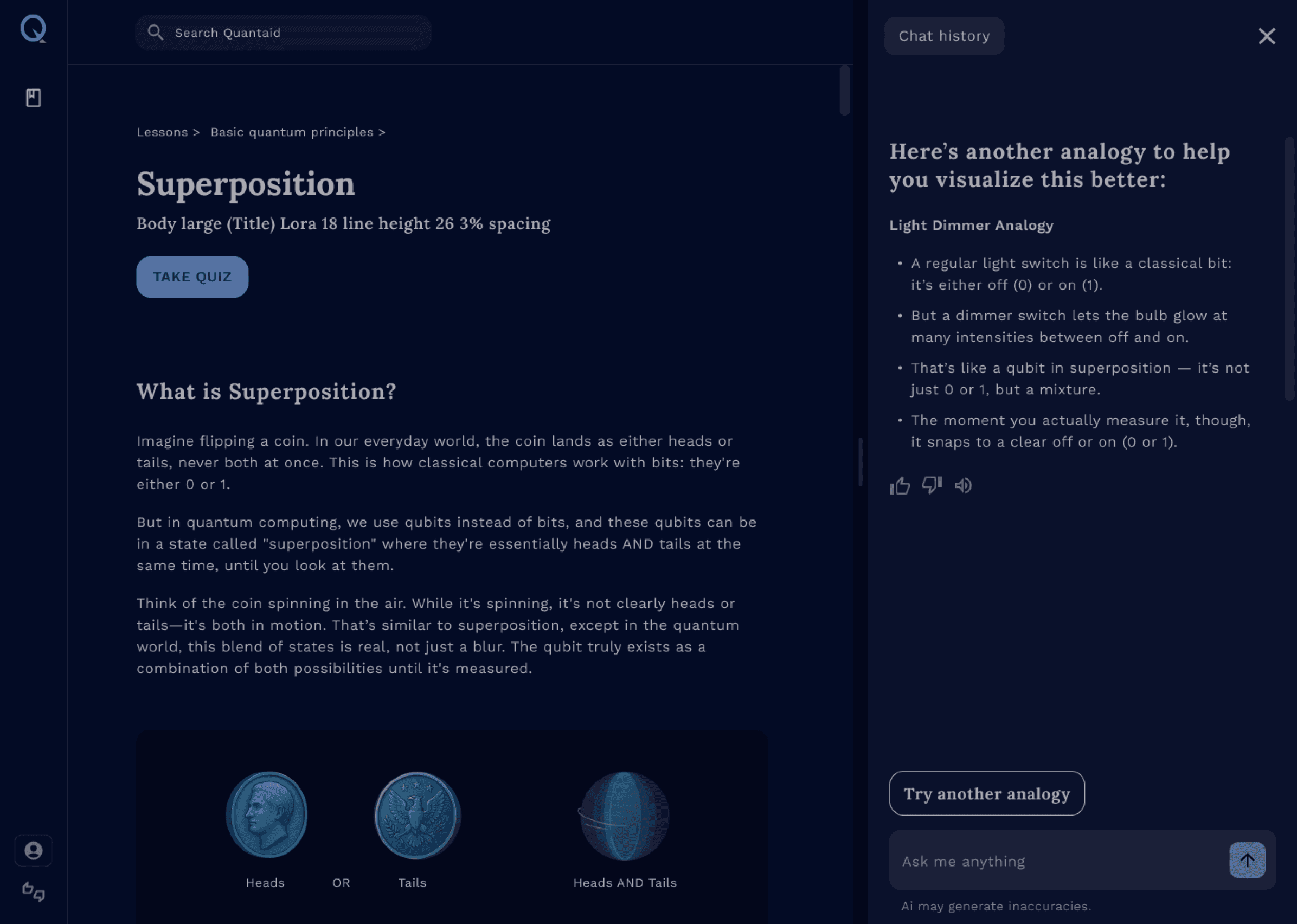
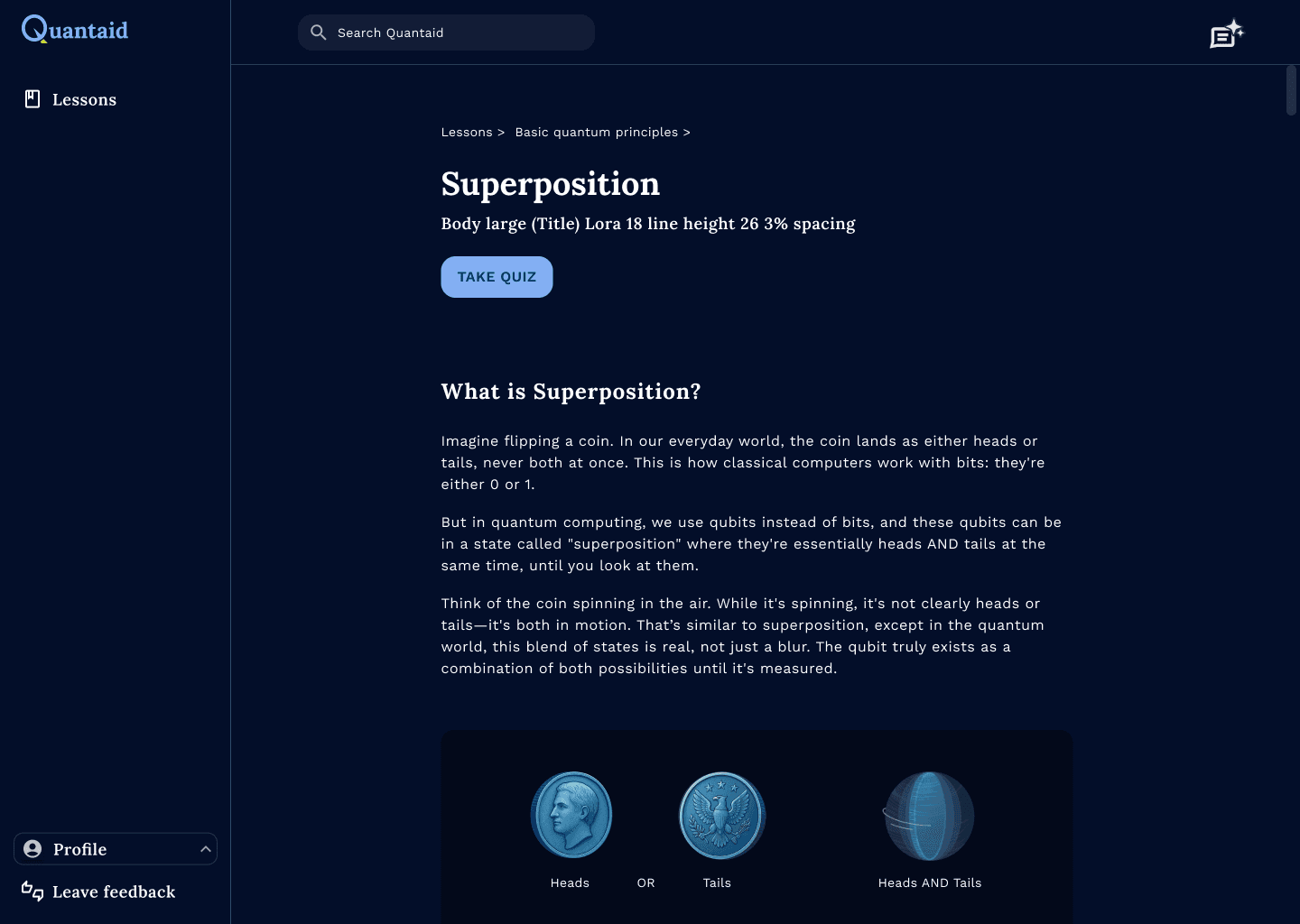
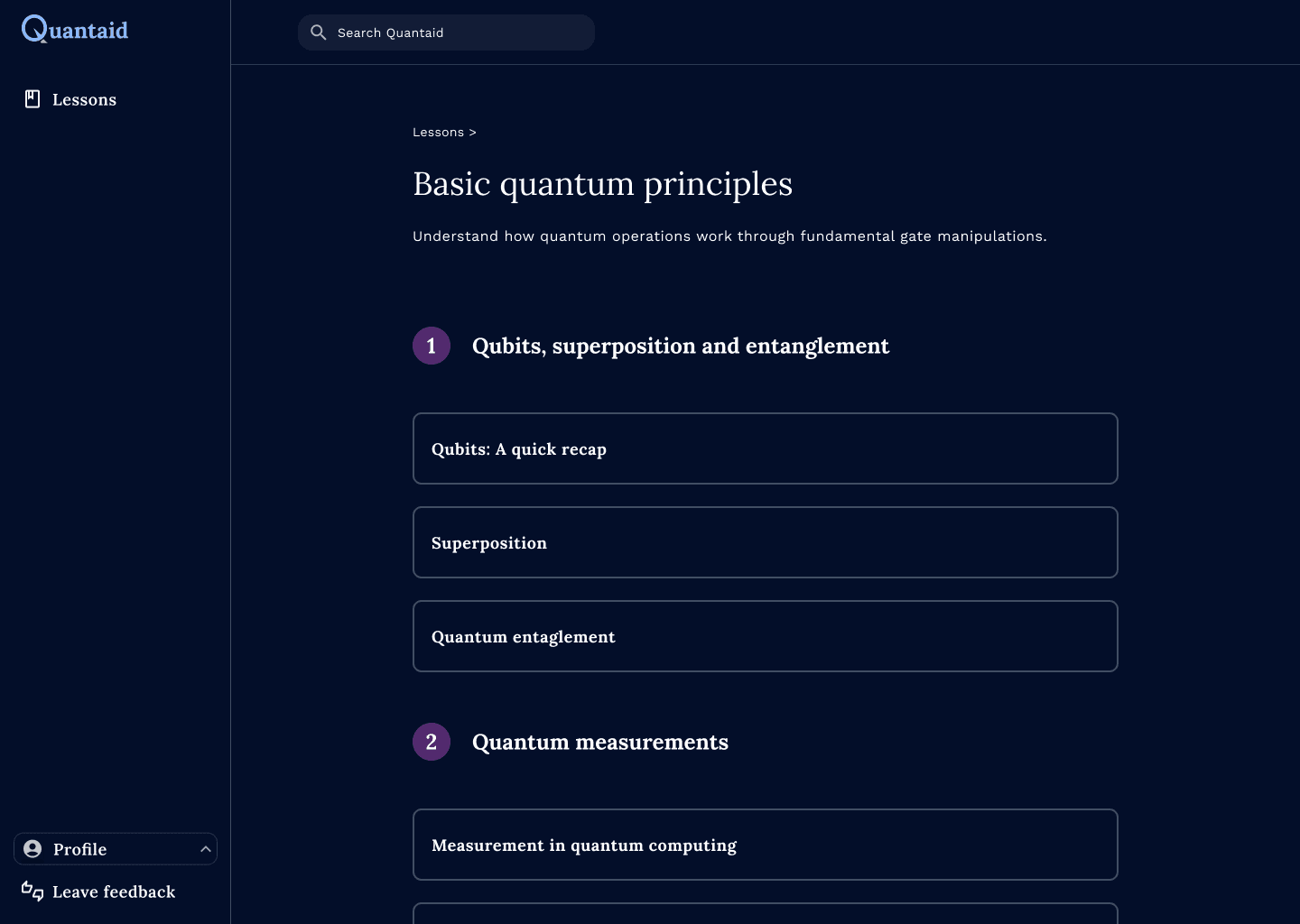
Quantaid is a desktop-first learning platform that makes quantum computing accessible through structured lessons, quizzes, and AI-powered support.
I collaborated with the team to expand the project’s focus into a more structured and comprehensive direction, designing an end-to-end web app learning experience in preparation for launch.
Role: UX designer
Tools: Figma, Figjam
Skills: Competitive Research, User Research, Branding, Prototyping, Usability tests
Team: Research student and developer (Kevin Hernandez, An Bui), UX Designer (Me)
2024-2025
Problem
Limited awareness and accessibility
Quantum computing is complex, expensive and perceived as inaccessible to the average learner.
Knowledge gaps
Learners often have partial understanding in one area but lack the cross-disciplinary knowledge needed to connect concepts effectively.
Early stage development and fragmented resources
The field’s rapidly evolving nature can make educational resources feel scattered or overwhelming.
Solution
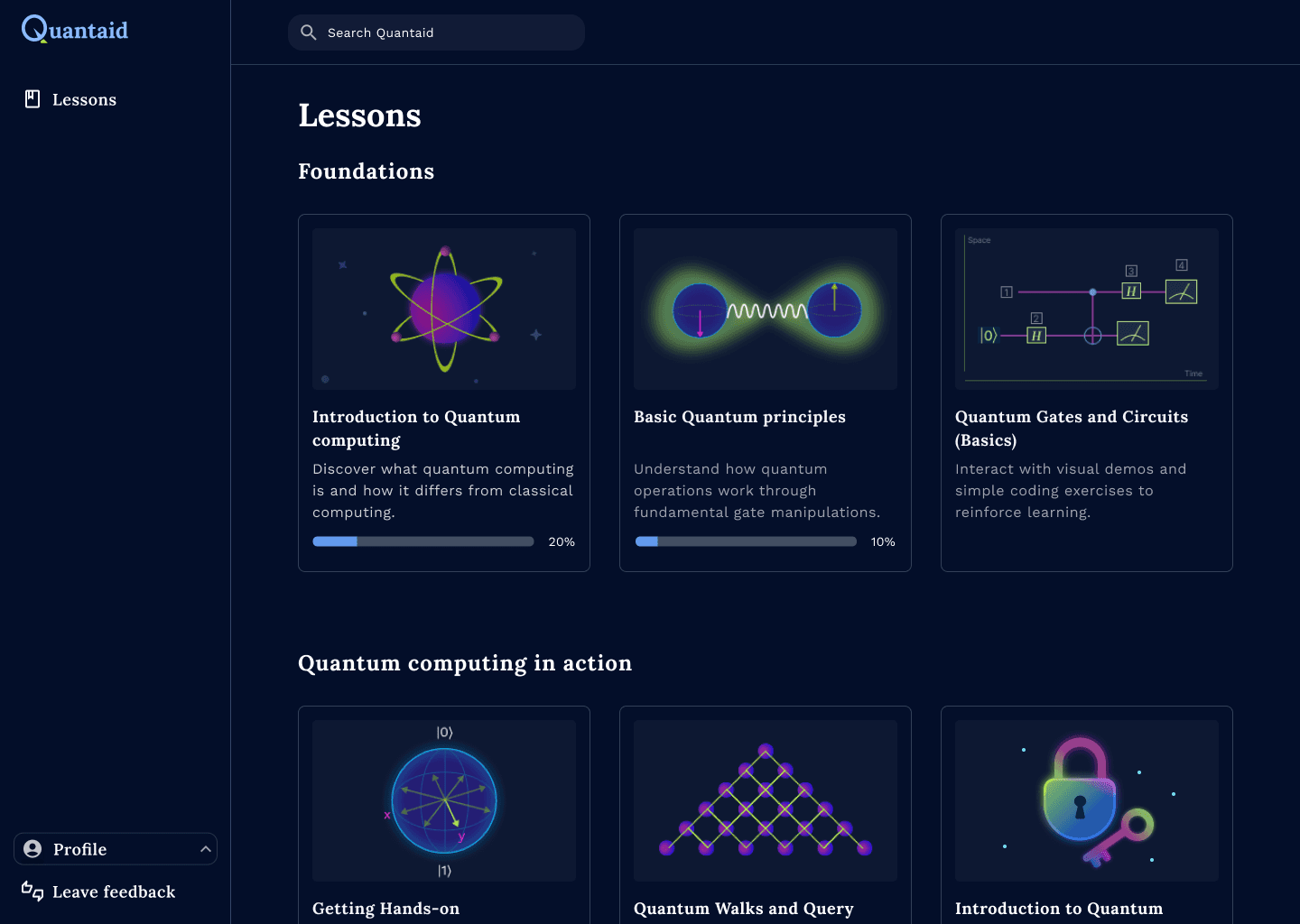
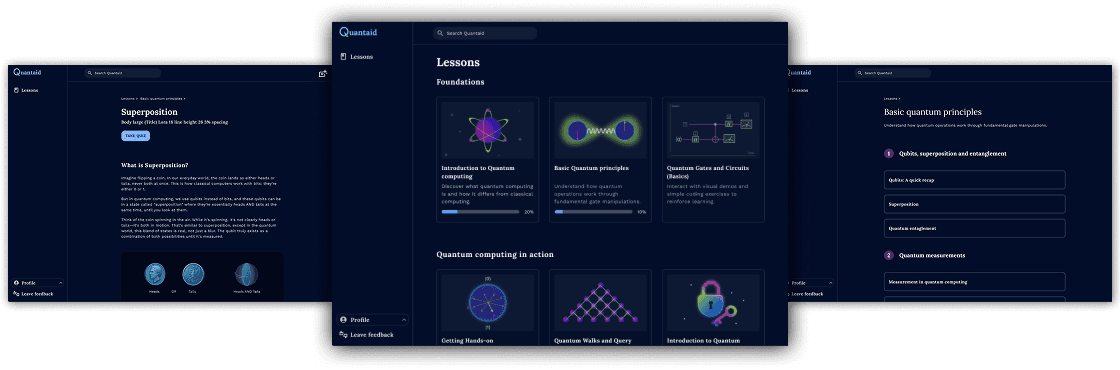
Process
When I joined the project, the team had already begun developing analogy-based quizzes grounded in preliminary research on AI-assisted learning.
However, there hadn’t been user research exploring how learners actually engage with quantum concepts or whether analogies alone could support understanding.
From there, I conducted a competitive analysis of other learning platforms which guided the planning of user interviews and a usability test.
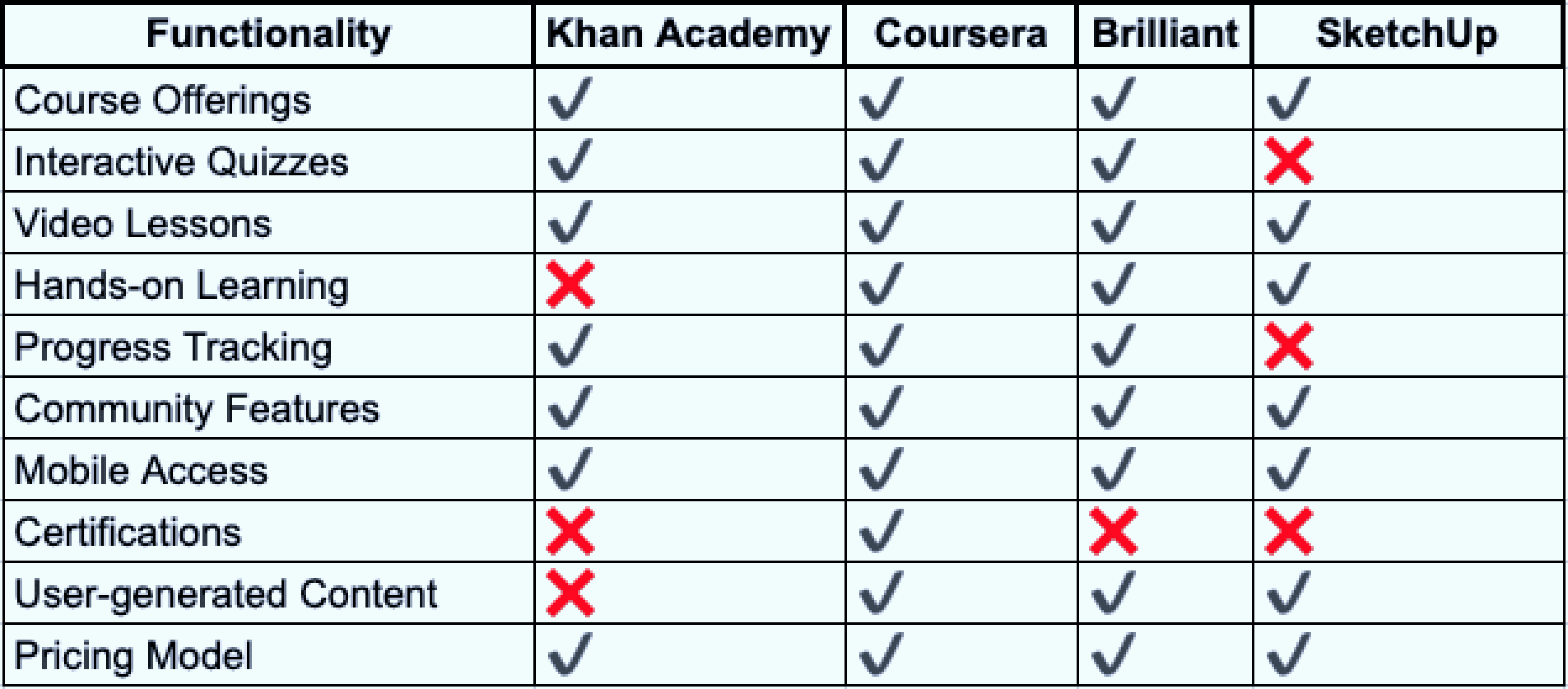
I found a consistent pattern of each platform teaching complex topics well. It also revealed a great opportunnity of reducing cognitive load through personalized learning paths. This aligned closely with our stakeholder’s initial vision of tailoring explanations to each learner’s background
Data confirmed that

Knowledge gaps Learners struggled to connect concepts across math, physics, and computing.
Limited accessibility Few platforms offered a structured or supportive entry point for beginners.
Mixed reactions to analogies Some analogies improved understanding, while others caused more confusion.
Two core user groups emerged
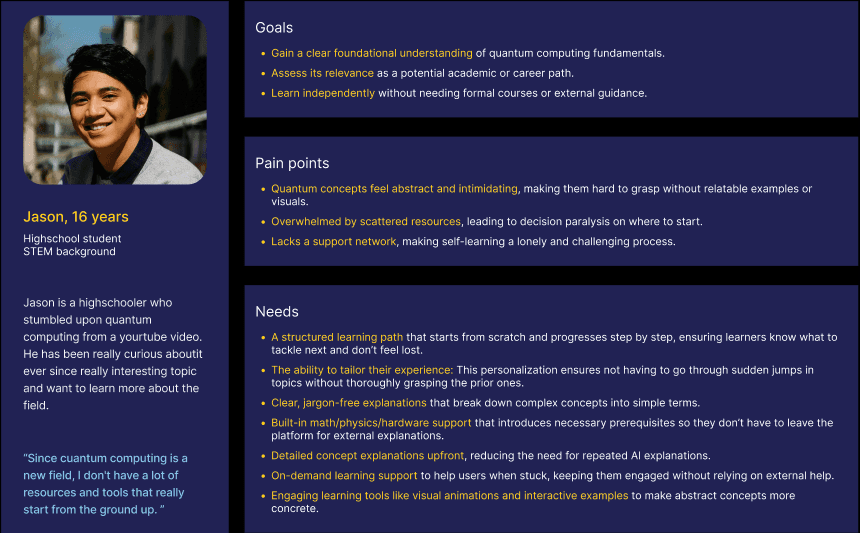
Novice learners who are interested in the subject and don’t know where to start
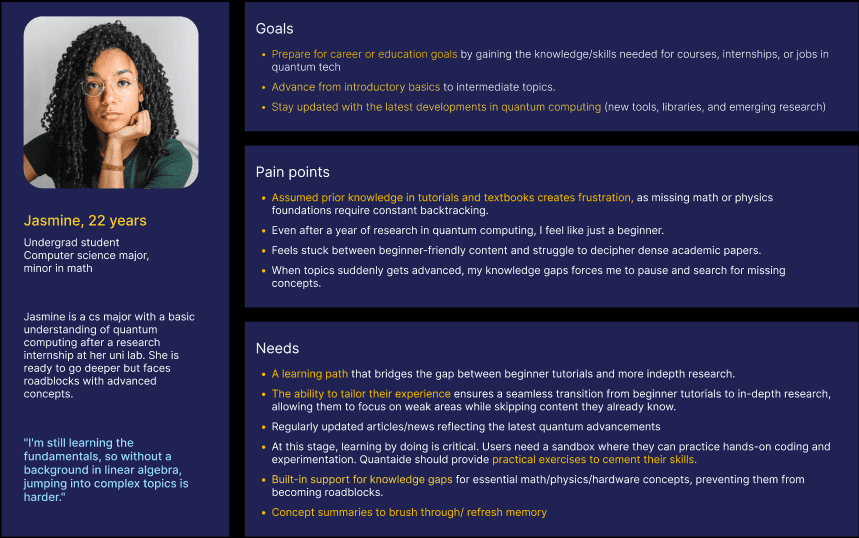
Advanced learners who have basic QC knowledge and seeking to continue their learning.
These findings helped realign the team’s vision moving from an analogy-first approach to a more comprehensive learning experience that supports different levels of understanding.
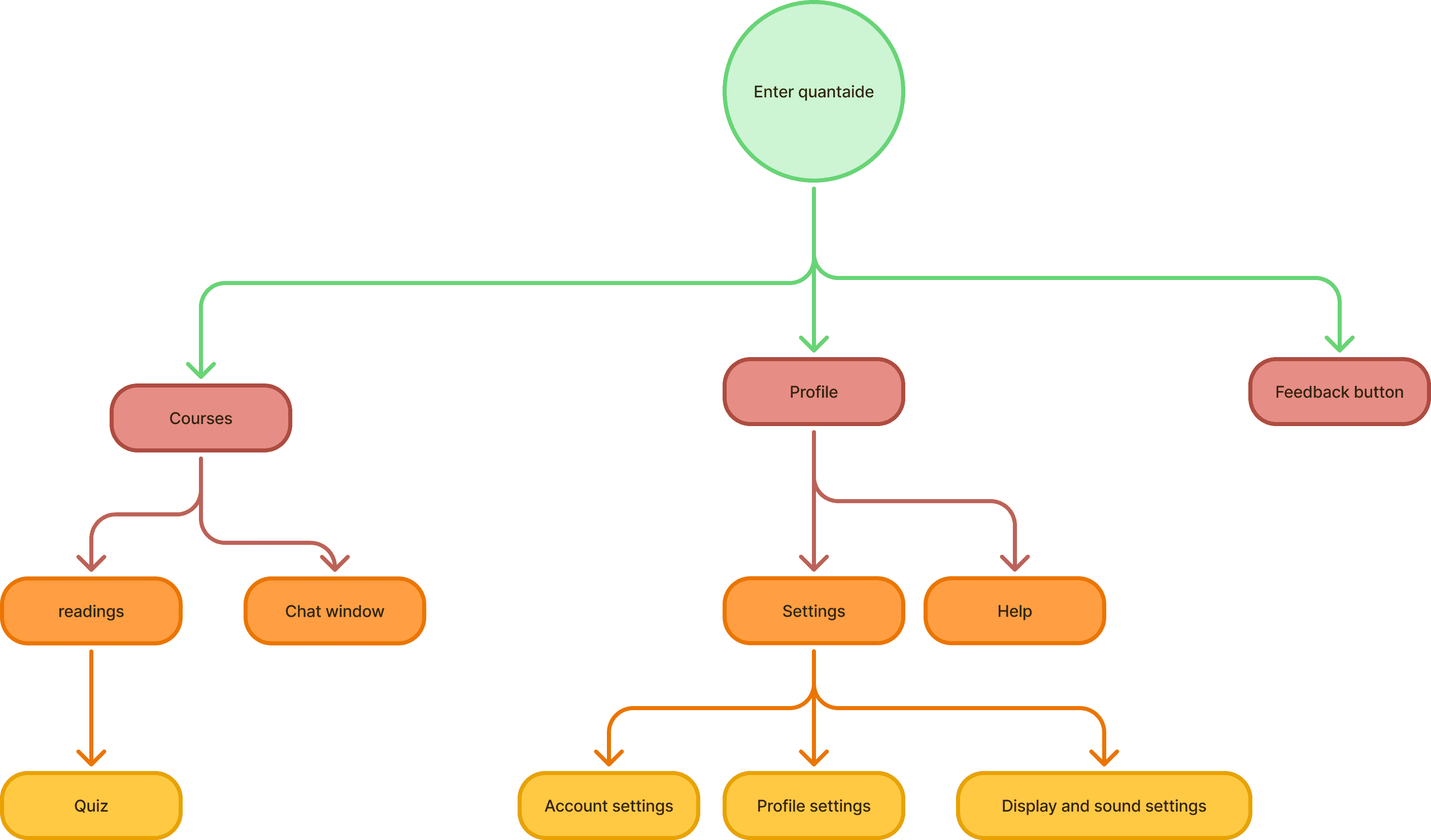
I mapped out all the key tasks users would perform on the platform and created a sitemap to visualize content structure.
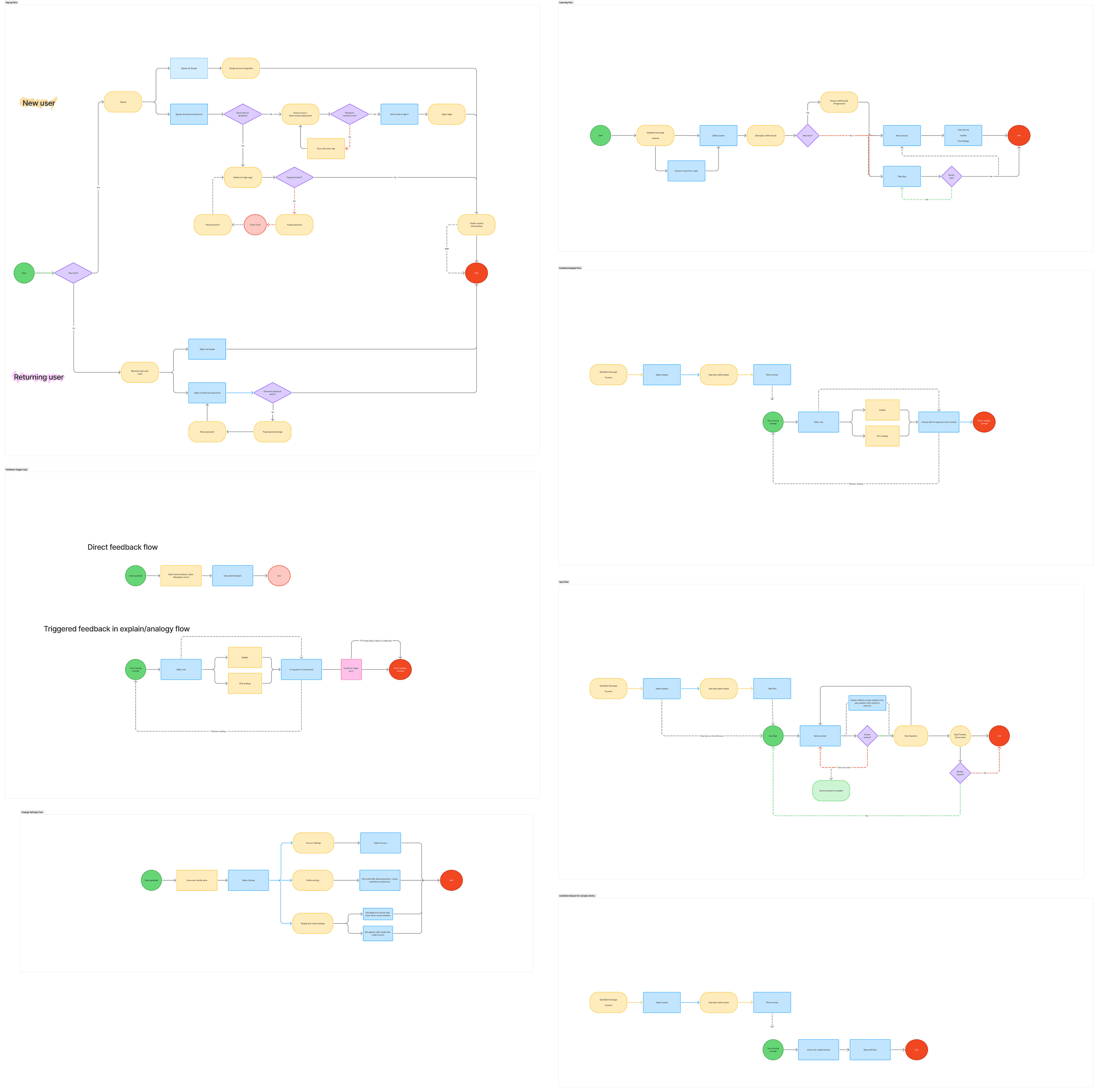
From there, I designed user flows to capture how Users move across various stages of learning.
Once I had more clarity, I began expanding on the initial framework ideas we had sketched, refining them into structured wireframes and interaction flows.
Before
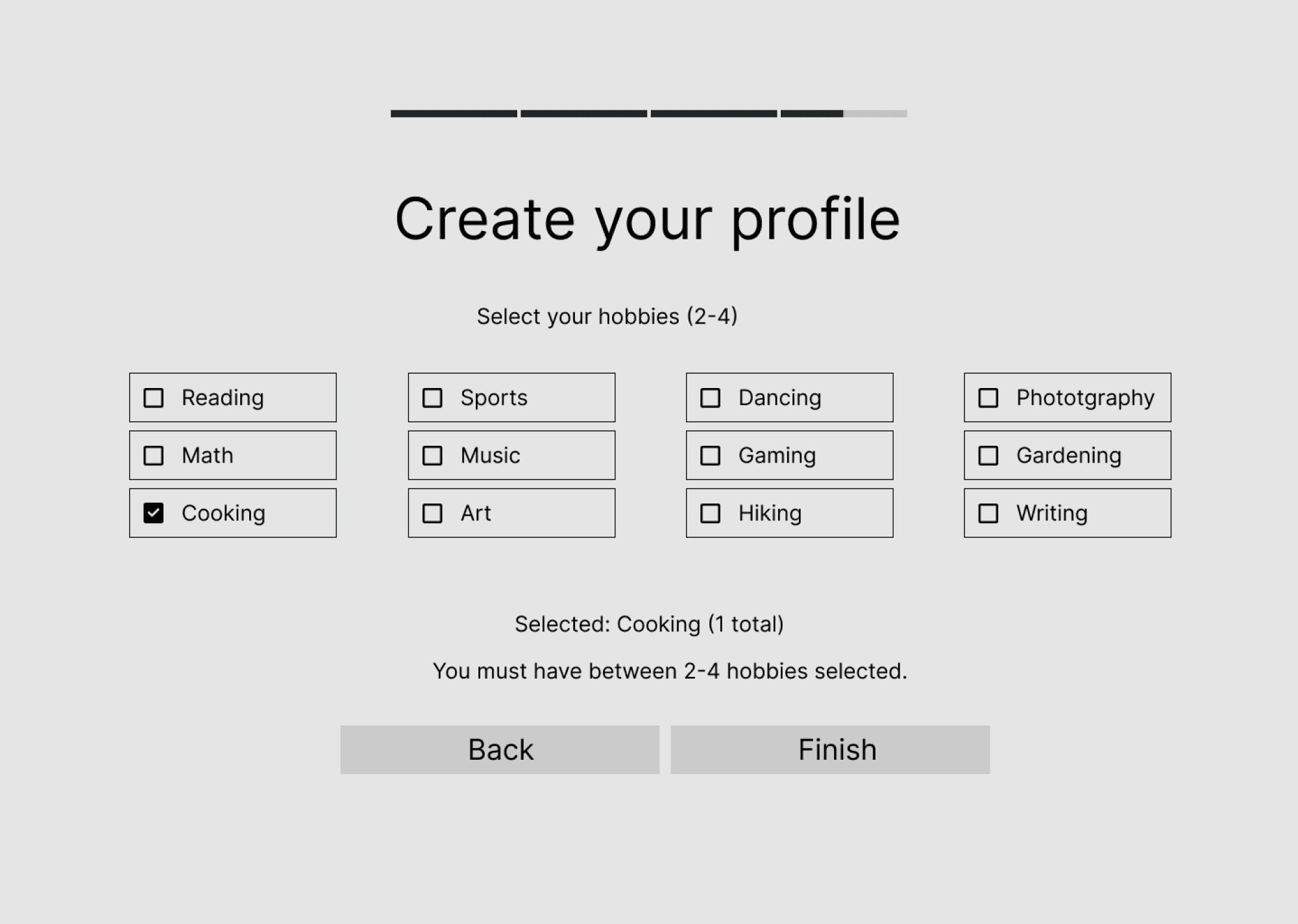
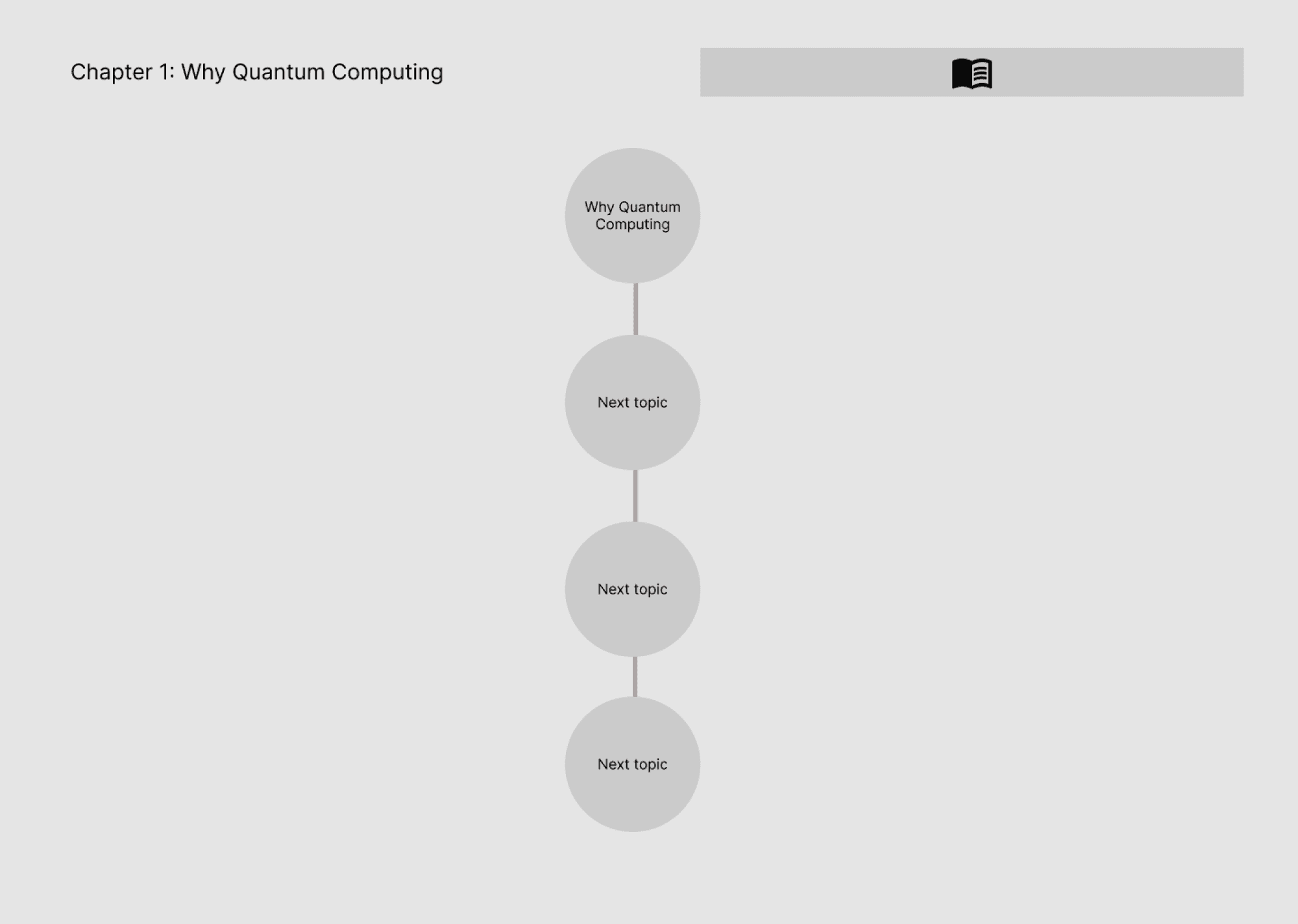
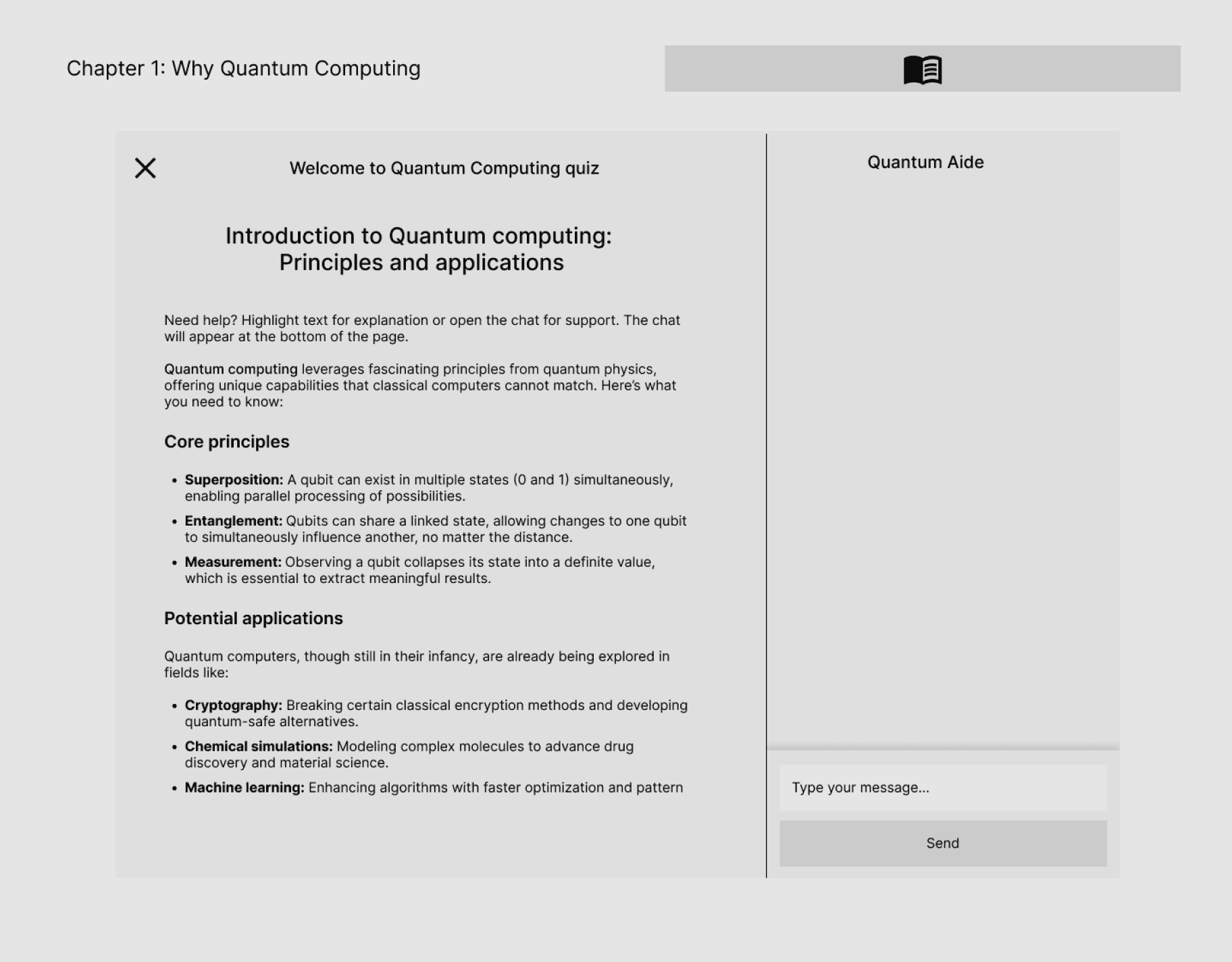
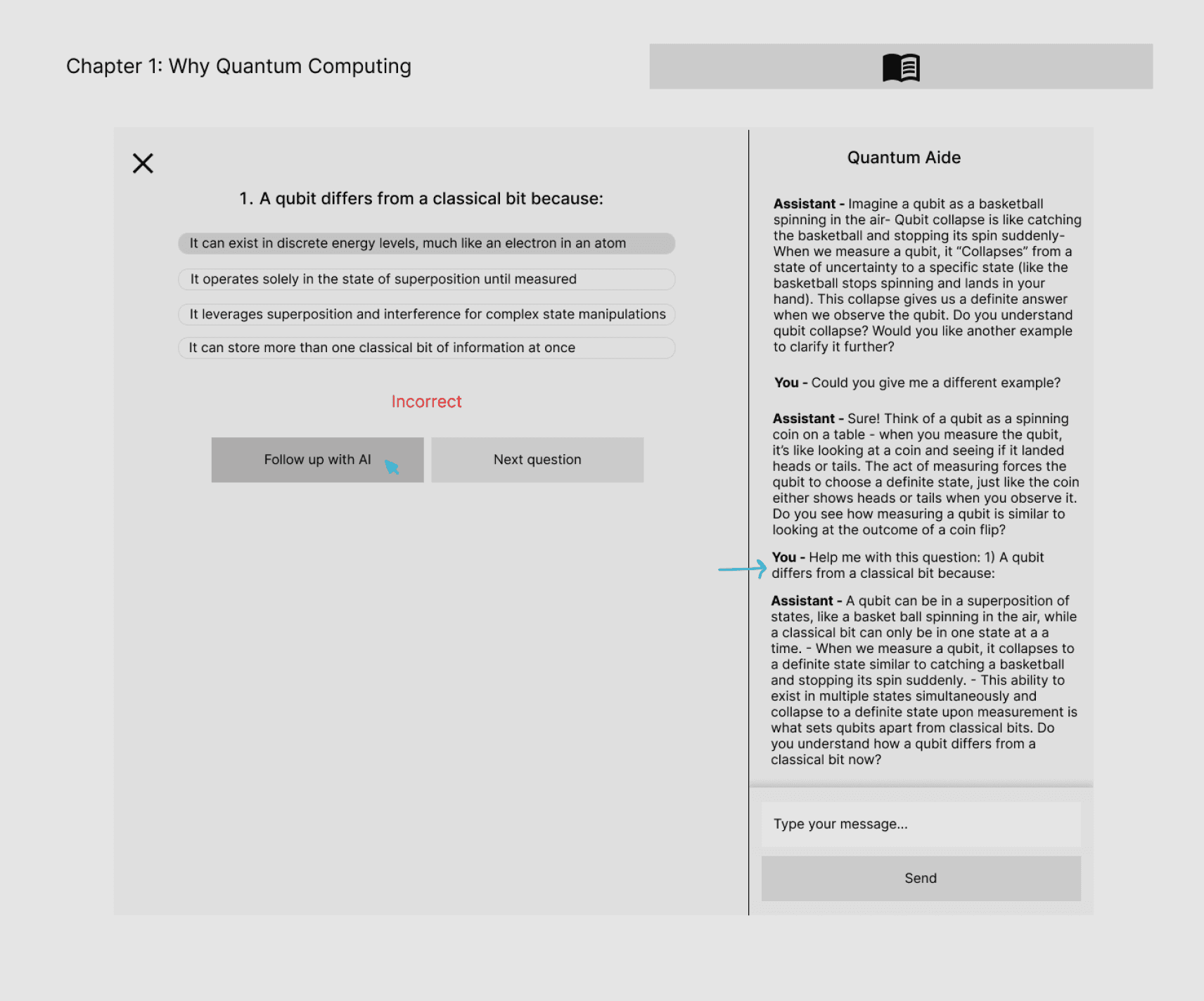
After
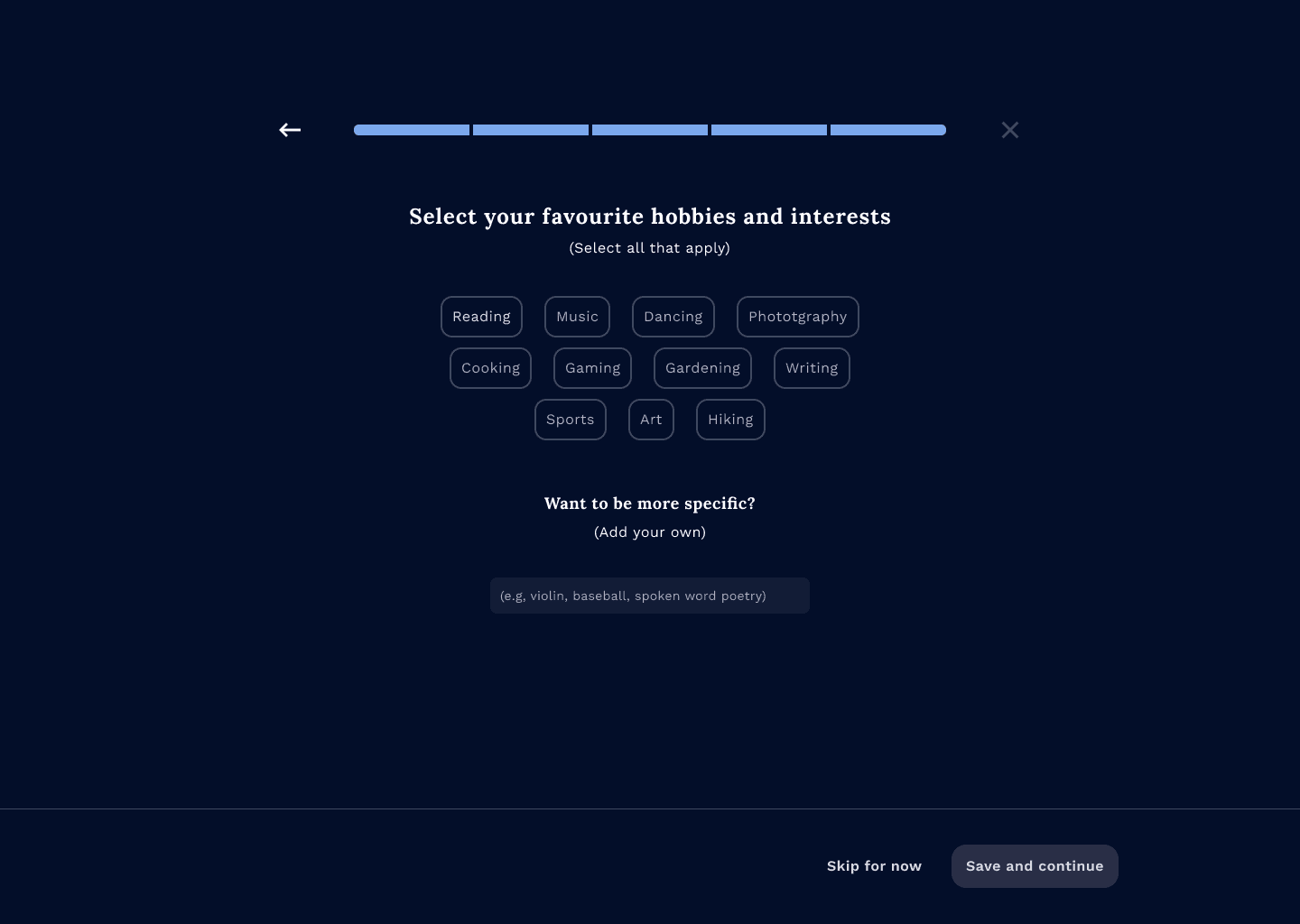
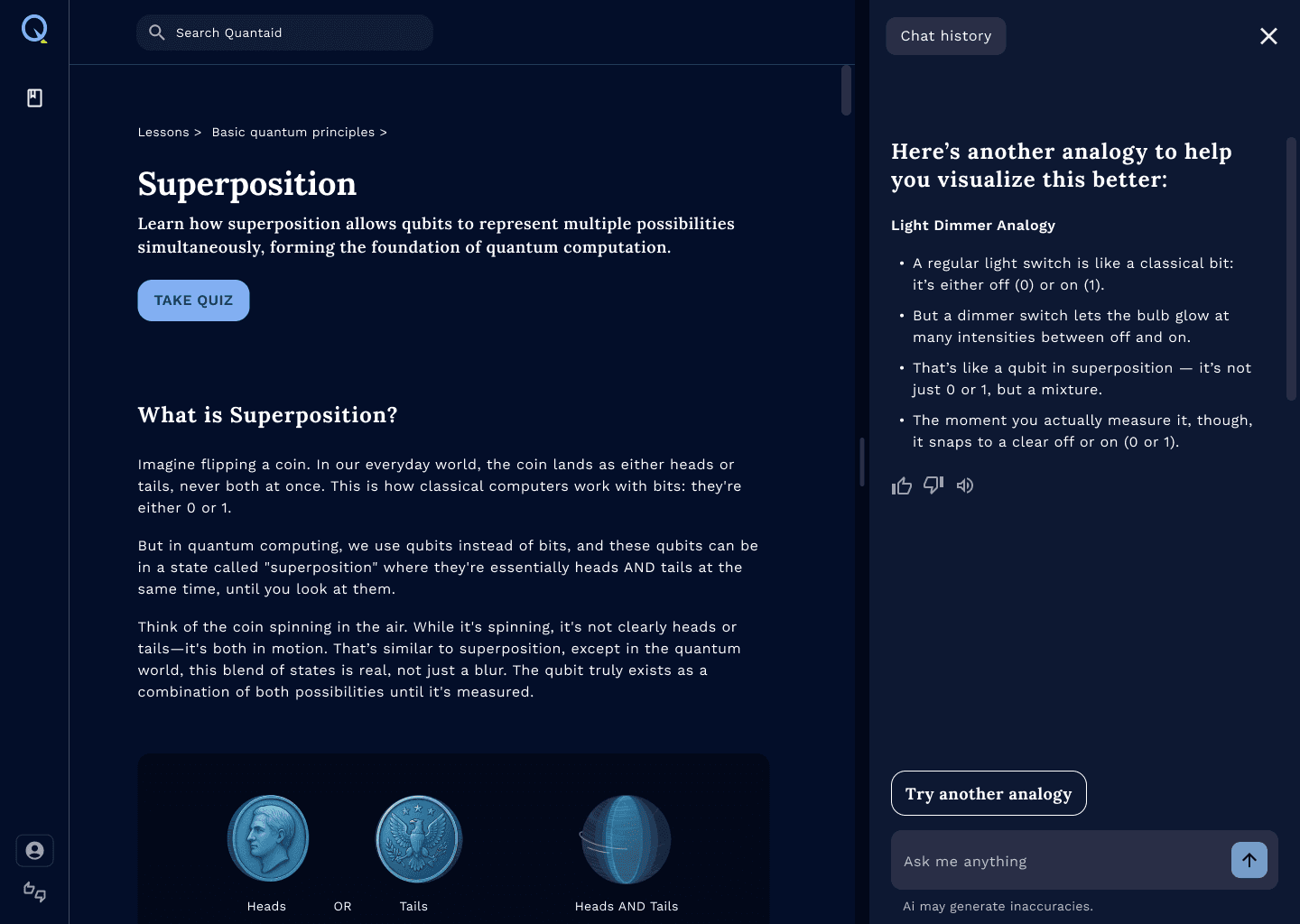
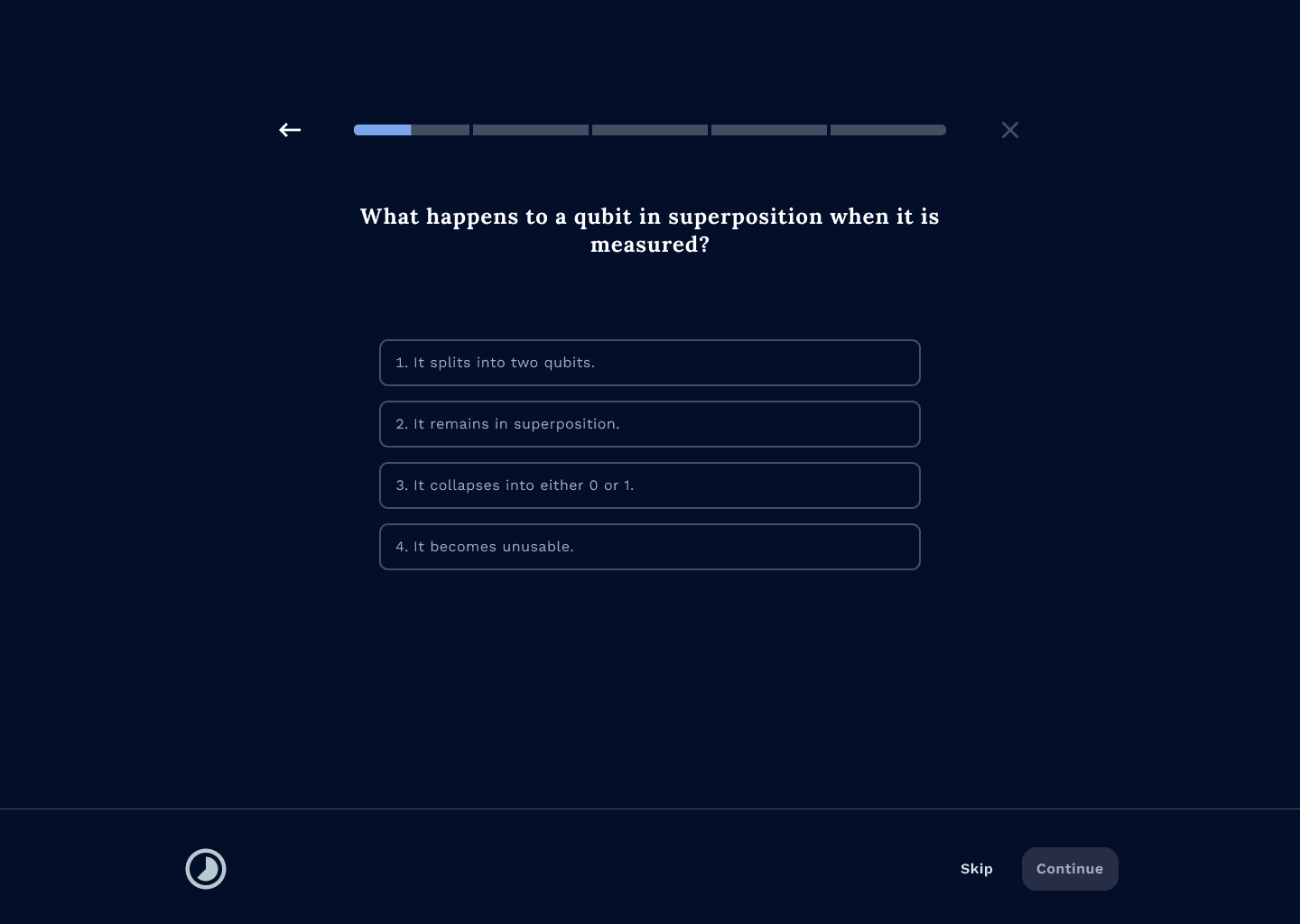
Branding
For the visual identity, I explored ways to connect the concept of quantum computing with a sense of curiosity and innovation.
The color palette centers on blue tones, chosen to evoke a sense of futuristic technology and innovation.
The logo design plays on the idea of a qubit’s position, integrating it into the letter “Q” to symbolize both the project’s name and its core concept. Delivered branding that was fun without distracting from learning.

Usability test
Usability testing uncovered important details I had missed, helping me refine the flow and make the overall experience feel smoother and more intuitive.
What worked
Users found the visuals engaging and appreciated AI support.
Analogies were helpful but seen as optional.
Quiz flow was clear and easy to complete.
Iterations
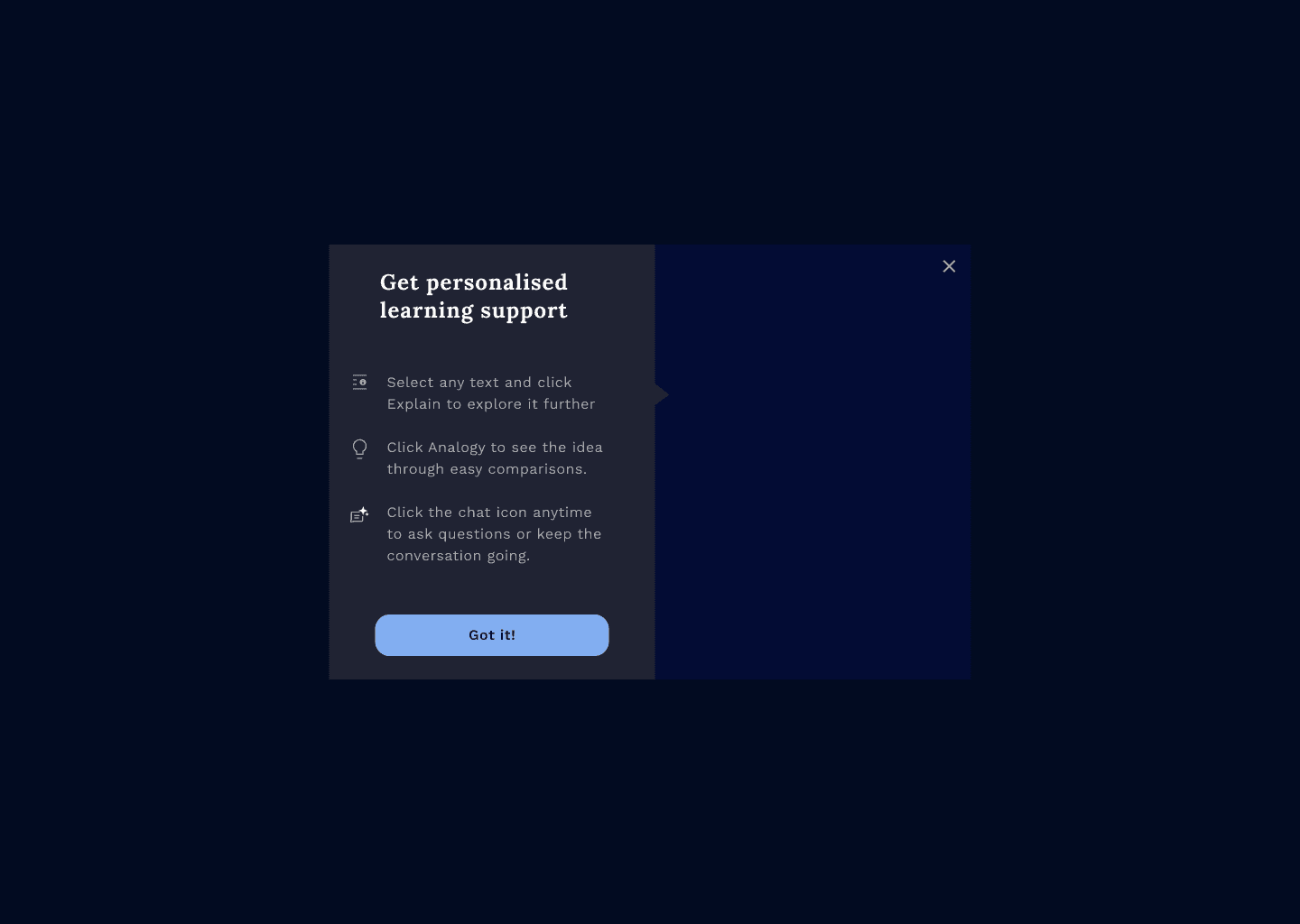
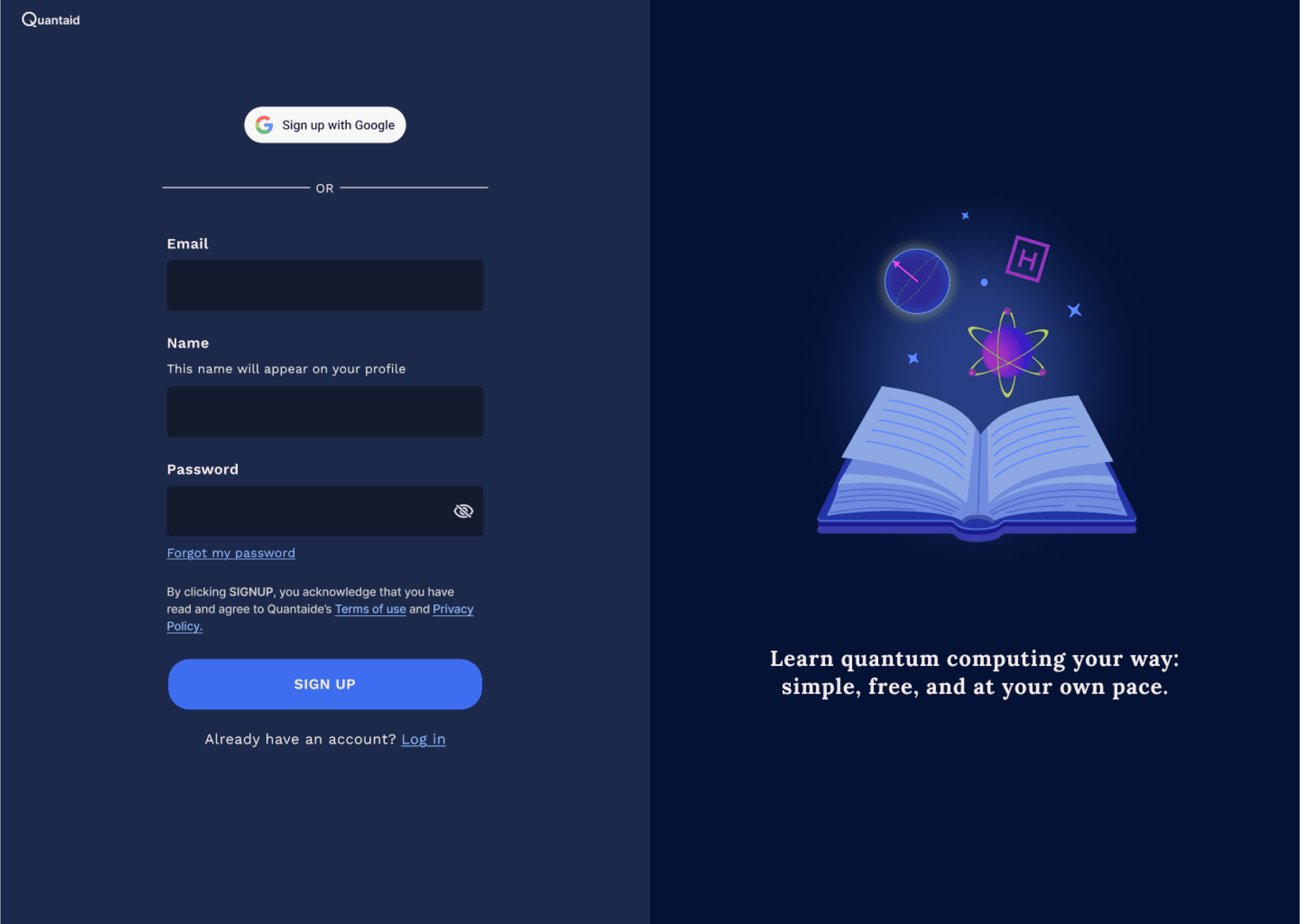
Added feature walkthrough flow after profile creation as users struggled to discover the core features.
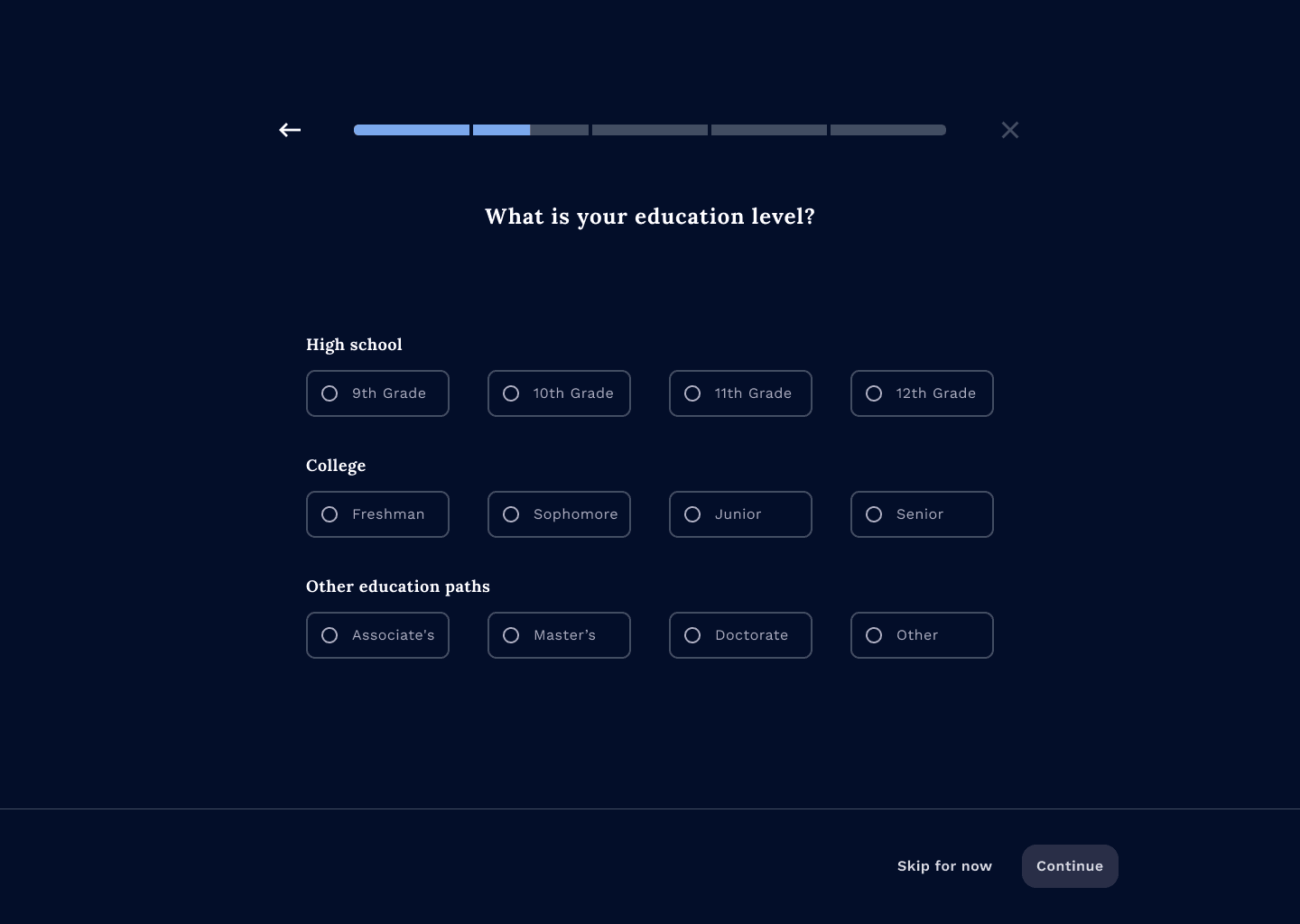
Added another category for users outside academia
Final designs


Next steps
Finalize layouts and test responsiveness across desktop, tablet, and mobile devices to ensure a consistent experience.
Refine visual identity to strengthen the platform’s personality and accessibility.
Collaborate with development team as they publish the live version.
Reflection
This project taught me to embrace iteration and trust the design process rather than over thinking decisions. Working closely with engineering students helped me see how design and development meet in real time.
I also learned to push back with data when user needs were at risk while also giving space for the team and stakeholders to shape the direction together.
